

The surprising link between language learning and the climate crisis
In the second edition of Office Hours, linguistics and culture professor Michael Cronin digs into time as a political and ecological concept, and what that means for climate systems.

WELCOME to Office Hours, Verdant’s series of conversations with leading researchers to break down barriers between academia and the public sphere.
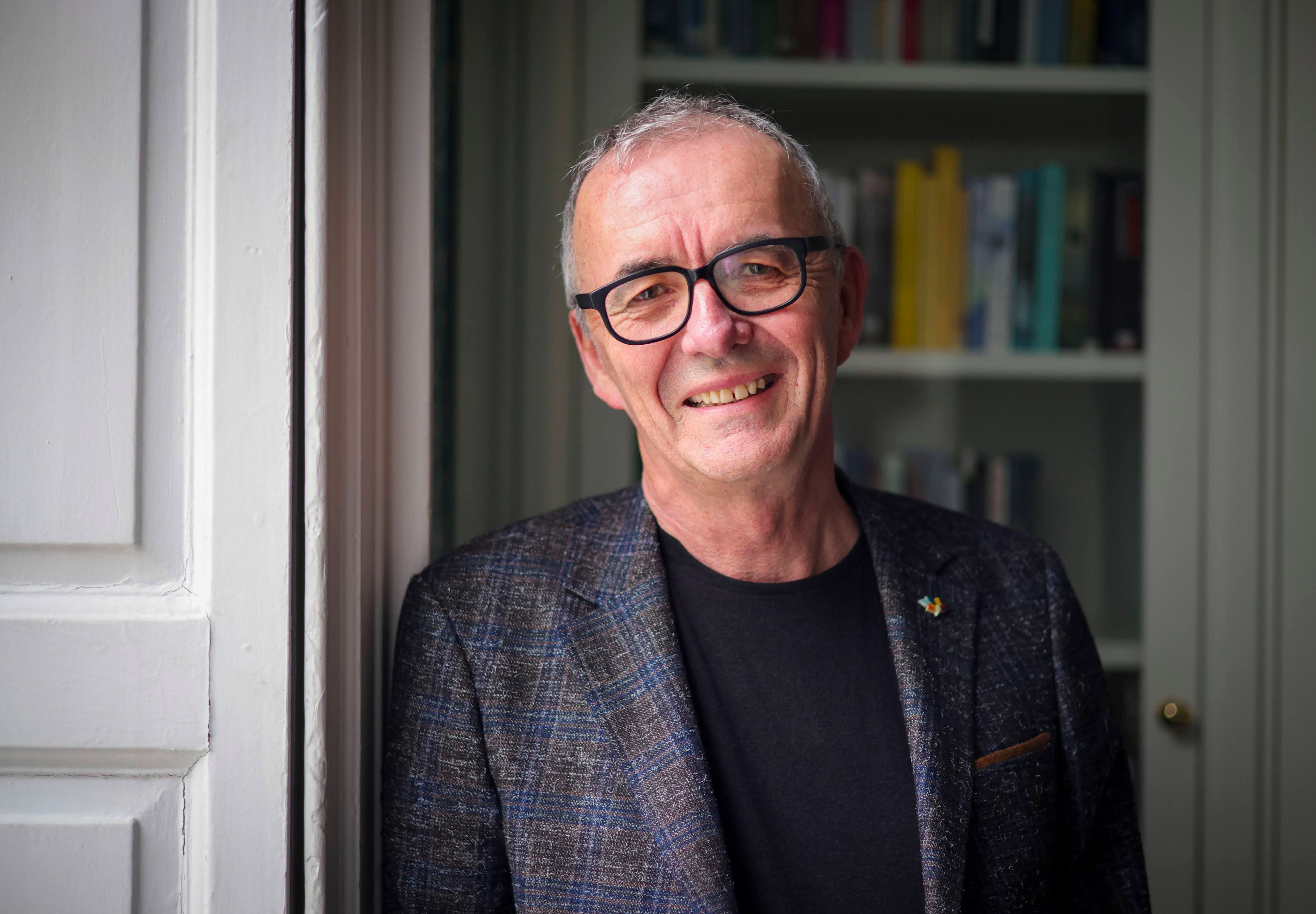
In this second edition, I (Tasmin here 👋) speak with Michael Cronin from Trinity College Dublin, who works at the intersection of culture and linguistics. Increasingly, he’s interested in how climate and language overlap.
There are countless examples of Big Oil and PR companies spinning the story, tweaking language, and skewing narratives to shift public opinion, but Cronin’s perspective is fascinating because he doesn’t talk about all of that. Instead, our conversation focuses on how time is a political and ecological concept, what language learning can teach us about climate systems, and it touches on eco-translation.
I really enjoyed this one, given Michael’s work was entirely new to me. We got chatting after I read his paper, “Foreign Neighbours: Climate, language, and the future”, which laid out a compelling argument about how the pace of modern life is ecologically, socially, and psychologically harmful.
In the paper, he wrote:
“First, ecological dissonance because the kinetic inferno of material growth ignores the limits of the natural sustainability of the planet. Secondly, social dissonance because the dehumanization of technological and market instrumentalism means that a growing number of citizens feel left behind in the backwaters of political exclusion.
“And the third form of dissonance is psycho-logical, insofar as the explosion of mental health issues in contemporary societies and the anti-depressants epidemic in the developed world – as detailed by Mark Fisher in Capitalist Realism (2009) – point to the heavy toll being taken on individual wellbeing due to the iron-pumping productivism of the modern corporatized workplace (Fisher 2009).
Dig into our conversation below. It has been edited for length and clarity.
Tasmin: Could you summarise your work around the intersection of climate and language, and what role time scarcity plays in that?
Michael: The fundamental distinction is between what we call instantaneous time and durational time. For example, I open up a text in French — that’s one language I teach — and immediately I get this little button that pops up on my screen saying, ‘do you want this translated?’ So that’s the idea of instantaneous time. I press this button, and the text will be instantly translated into another language. Of course, one of the things about the modern era and what tends to characterise us is that things are going faster and faster. It’s what we call space-time compression; once the railways were constructed, it meant you go from point A to B in a shorter and shorter period of time. In the 20th century, it was the jet plane.
So space-time compression is basically that sense of the shrinkage of space and the acceleration of time. When we think of things like fast track in airports, there’s a great deal of prestige that’s associated in our society with being able to get from point A to B as quickly as possible. The healthier you are, the more affluent, the quicker you are and of course, this is seen as a kind of supreme virtue in a time scarce society.
And of course, this is precisely what language learning is. Language learning is very time consuming. It needs hours and hours, days and days, weeks and weeks, months and months. I’ve been learning French for the best part of 40 years, I’m still kind of learning the language. So this is what I would call durational time. It’s activities that require an extended period of time.
This precisely brings us to the question of where we are with the climate crisis. Our planet functions on durational time. It functions on very long term cycles of growth, renewal, restoration and so on. The problem is that the very accelerated time of modernity, of this huge short-term extraction of resources and energy and so on, means that our soils and our rivers and our forests just get exhausted. They get depleted, even though they have that longer term capacity to restore or renew themselves.

One of the things that language learning does is to initiate humans into a sense of durational practices, to get them into a sense of the ability, or the capacity to think longer term about the activities or the things that they do. One thing that language does is give us a new perspective on how we might relate to time and move away from, I think, some of our more toxic relationships to time.
Tasmin: It really gets to the core of a regenerative way of thinking, or, systems level thinking, which lots of people are quite interested. However, it’s sort of missing more broadly in society. How did you come to this intersectionality?
The two areas that I work a lot in are translation studies and travel writing. What drew me to both those areas was the fact that they allowed me to explore all kinds of different areas, across science, geography, economics and culture.
Tasmin: Do you find there’s a lot of intersectionality in your work?
Michael: I think there is now. I wouldn’t say there was at the beginning of my career. There has been a sea change in the last two decades where many academics realised that they’re not just working in the area of their own specific expertise, but that there’s a duty to the wider society to communicate that knowledge to the community.
There’s a greater interdisciplinary, cross-disciplinary curiosity amongst a lot of my younger colleagues. To some extent, by opening up your disciplines, by opening up areas of inquiry, we’re returning to much older traditions in Europe and elsewhere, of more broad-ranging practices of inquiry.

I’m involved in a project at present. I have a PhD student working with me, which is looking at the impact of wind turbines on various species that are in and around the wind turbine. I’m working on how we translate between the human and the more than human world. In other words, insects and birds and animals and creatures of various kinds, they’re communicating with each other in their different languages. So how do we translate between their languages and our language so that we can develop ways of allowing the wind turbines to cohabitate in a non-harmful way with these different populations? That’s what we call eco-translation.
On that project, I’m working with people in the engineering department, the computational department, and the zoology department. This is the opening up of the work that my colleagues and I do in the humanities, opening it up to the physical, natural sciences.
If you enjoyed this edition of Office Hours, check out our first installment. I spoke with Dr Ewan Gibbs, who is known for his work on the legacy and meaning of coal mining, on how culture, identity and power — literal and physical — are compounded by the energy transition, which has led to a profound disconnect between energy generation and consumption.

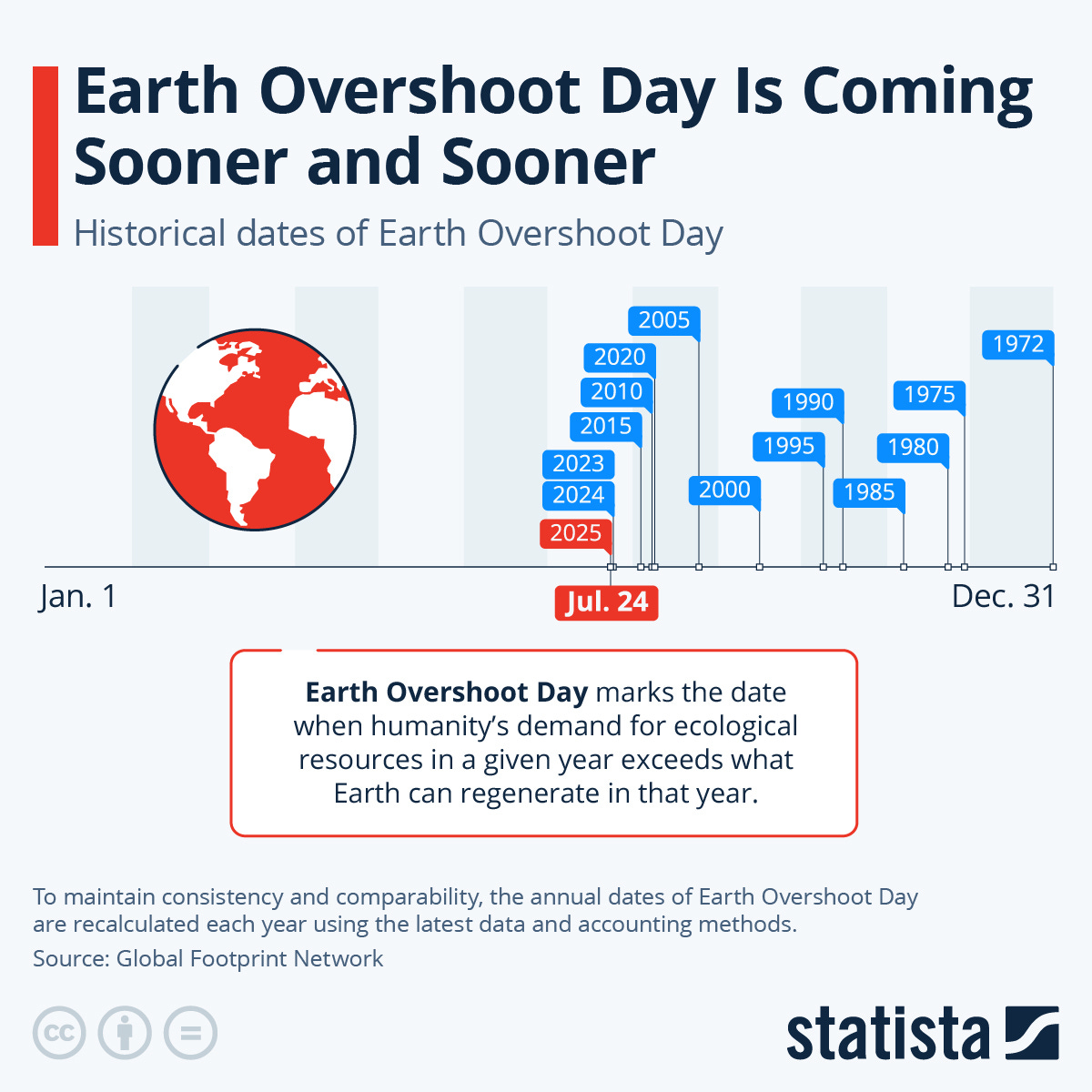
Chart of the week:
Money moves
Antora Energy and POET commissioned a 5 GWh thermal battery at a South Dakota bioethanol plant, one of the largest energy storage deployments globally. I’m no fan of bioethanol, given its murky feedstock and chemical and water intensity, but it’s worth noting the news given its relation to thermal batteries. (Independent)
Startup Greenpixie, which helps Fortune 1000 companies including Mastercard decarbonise cloud and AI use, raised £4.7 million from the investment arm of hydropower company VERBUND, Octopus Ventures, and others. (TFN)
Crux, a platform connecting clean energy developers and investors that is designed to help manage sustainable finance, transferable tax credits, debt, and enquity, secured $500 million in debt from Nuveen’s energy infrastructure credit arm. (TFN)
The Global Innovation Lab for Climate Finance hit a $5 billion milestone for cash mobilised for climate action in emerging markets. It’s backed by over 150 public and private investors. (Climate Policy Initiative)
The New Zealand government will amend its Climate Change Response Act 2002 to prevent climate litigation. The changes will apply retroactively to both current and future court proceedings, including a High Court case brought against six major emitters. (Down to Earth)
Humanitarian funding has dropped from $43 billion in 2022 to $28 billion in 2025 — they are just two numbers that stood out to me in this piece on the end of international aid. (NYT)
People moves
Dustin Greenwood joined newcleo as VP of US operations, arriving from BWX Technical Services where he managed a nuclear site.
Oliver Parson moved from the UK’s National Grid, where he led data science, to Octopus Energy as a product data science lead.
Vinaey Kalyan left Rivian’s powertrain team for a electrification and energy solutions role at Caterpillar, reflecting how heavy machinery incumbents continue reaching into EV talent pools.
Kimberley Raine said goodbye to Kaluza for a people and culture partner role at Google DeepMind.
Aajan Quail joined QuantumScape as a senior data scientist, having previously co-founded and led Materia Chemistries as CTO. A founder stepping into another role is always interesting, especially since his startup is still listed on his LinkedIn.
As ever, data and analysis provided by Workforce.ai and verified by Verdant.
We missed last week’s roundup, did you? Let us know if you find this valuable!